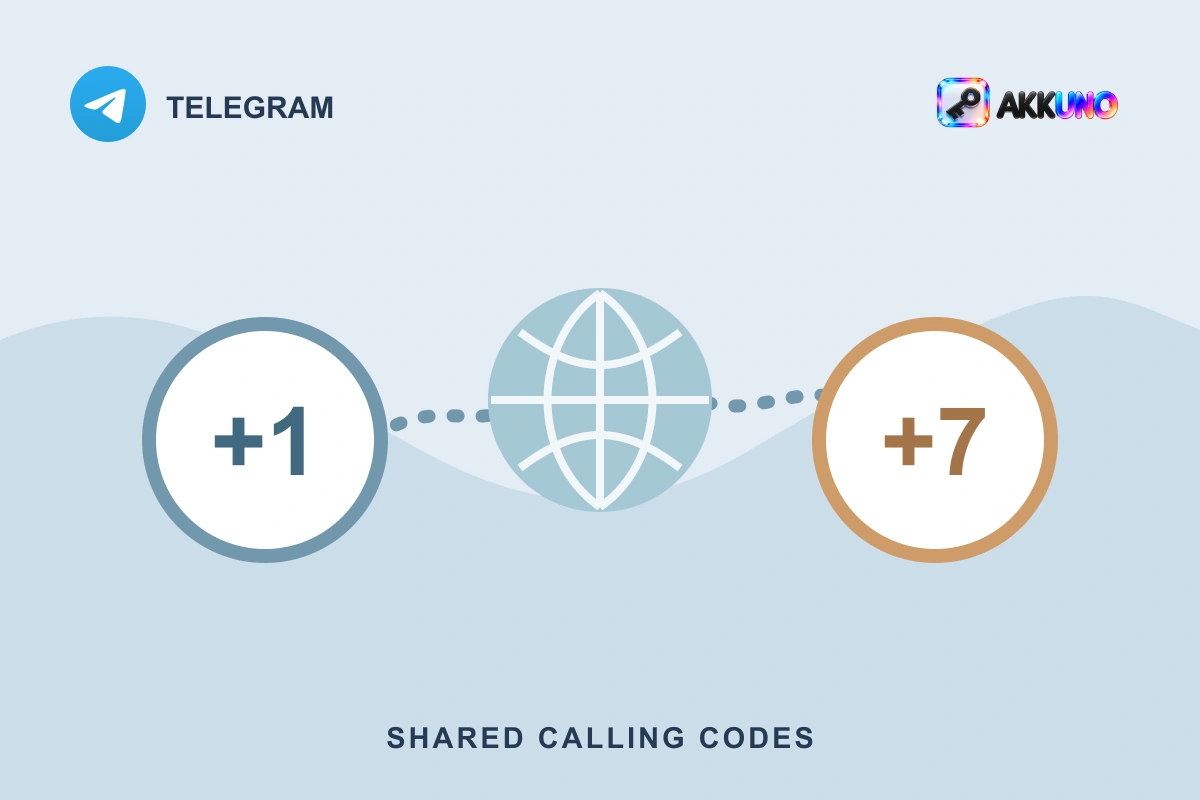
A phone number beginning with +1 is not automatically from the United States: Canada and other countries and territories share the North American Numbering Plan. The +7 code is shared too, by Russia and Kazakhstan. Identifying a particular number requires subsequent digits and a current numbering plan; even then, the available information may not support a definite conclusion.
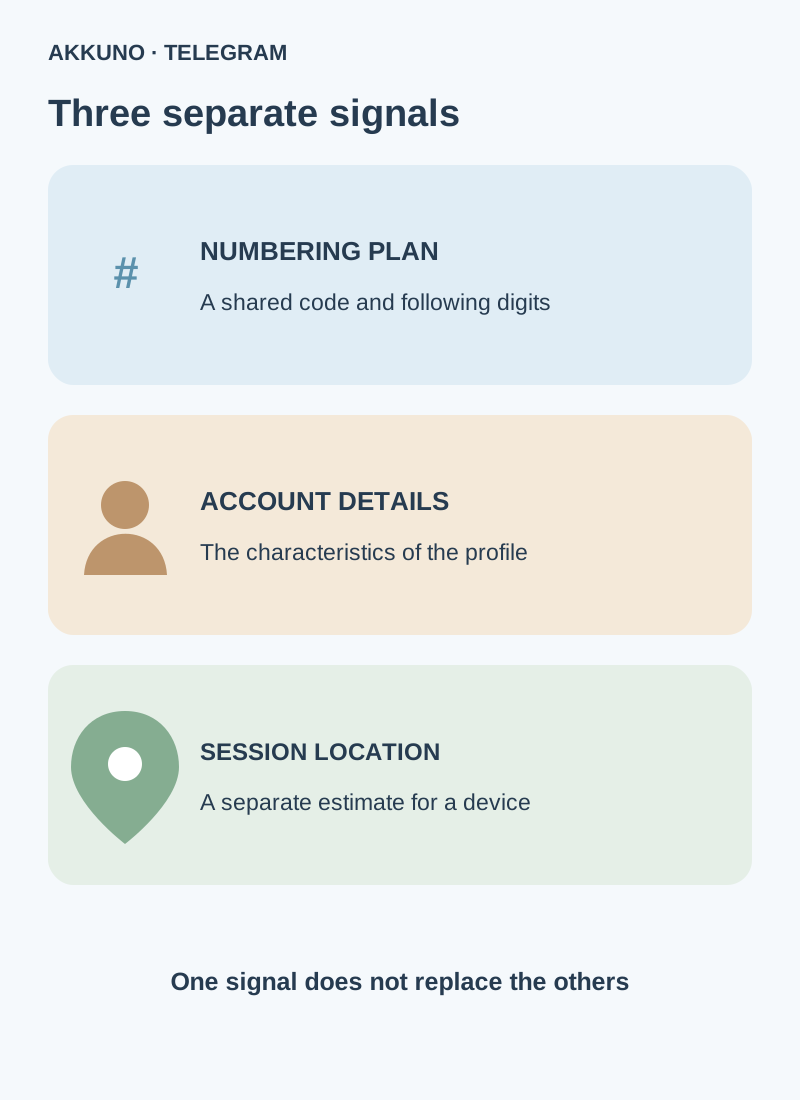
For Telegram, distinguish the country associated with a phone-number range, a device’s actual location and the account’s own properties. A calling code does not prove where a person is now, which language they use or which app features they will have.
What an international code means
The plus sign marks international number notation. A calling code follows it, then the remaining digits of the national or shared numbering plan. In everyday language, “country” may refer to a territory or a telephone plan, but those are not always the same thing.
| What you see | Supported conclusion | What it does not prove |
|---|---|---|
| +1 | The number is in the shared NANP plan | That it must be from the United States |
| +7 | Russia and Kazakhstan share the code | That it must be from Russia |
| Further prefix | It may identify an allocated range | The owner’s current address or nationality |
| Country in Telegram sessions | An estimate for a particular session | The phone-number range’s country |
Why +1 is not just the United States
+1 is the shared international calling code of the North American Numbering Plan, or NANP. Its administrator NANPA lists the United States and its territories, Canada, Bermuda and several Caribbean countries and territories among its participants. So +1 without subsequent digits does not distinguish the United States from Canada.
An ordinary NANP number has a three-digit area code after +1 followed by a seven-digit number. A complete area code and current reference can indicate how the range is allocated. Some codes designate services rather than an ordinary geographic area; not every code answers the country question. If a particular country matters, a product label showing only +1 is not enough: check the specific characteristics with the seller.
A number from a particular range does not itself prove that its user is currently there: a phone can be used while travelling or living abroad. Conversely, a device’s location does not reliably reveal its phone-number prefix.
Why +7 is not just Russia
Russia and Kazakhstan share the +7 numbering zone. The International Telecommunication Union published range allocations in its June 2026 bulletin, and Kazakhstan separately confirmed joint use. Subsequent digits help match a number to a plan, but +7 alone does not identify a country.
For example, the published plan allocates Kazakhstan ranges beginning after +7 with 0, 6 and 7. Allocating a range does not mean every possible number in it has already been assigned or is available. Some service ranges are shared, so do not assume one following digit always gives an unambiguous answer. Check the particular range and number type against the current plan.
Numbering plans change. Do not draw a final conclusion from an old screenshot, an incomplete number or an unverified online table. If an account’s characteristics matter, ask what the country label in the catalog actually means.
What a code says about a Telegram account
A number and its numbering plan are one characteristic of a profile. Telegram lets users control phone-number visibility in privacy settings. If the number is not shown to you, a name, avatar or language does not reliably reveal its code. Available information depends on settings and the relationship between users.
The country displayed for an active session is an estimate for that session and can differ from the phone-number plan. Do not equate it with the owner’s nationality or a guaranteed physical address. A location estimate and a country label are different facts; review suspicious sessions using several signals and your security settings.
A calling code does not guarantee the absence of restrictions, a particular Premium price, profile age or the ability to sign in again. Check those questions separately: a prefix is not a substitute for product characteristics and actual access.
Check characteristics before choosing
- Define the task. Do you need a particular numbering-plan country, or an account for a specific work process?
- Compare the exact listing. In the Telegram catalog, review the particular option and delivery format. A general +1 or +7 label does not identify a country by itself.
- Clarify the label. Ask AKKUNO support what the listed country means and which characteristics are included in that delivery. Do not ask for a complete number or secrets to be posted in a public chat.
- Check access separately. Retain working login methods and do not share codes, passwords or session files. Our login code and cloud password guide explains the difference.
- Avoid unverified promises. A number range does not prove a person’s location or guarantee Telegram behaviour or the absence of restrictions.
For several profiles, record confirmed characteristics and their sources without keeping secrets in the same register. Our account register guide covers that workflow.
Frequently asked questions
Are all +1 numbers from the United States? No. NANP is shared by Canada and other countries and territories as well.
Are all +7 numbers from Russia? No. Russia and Kazakhstan share +7; check subsequent digits against the current plan.
Can a calling code show where a person is now? No. A numbering range is not a reliable current-location indicator.
Can every Telegram contact see the number? No. Telegram provides phone-number visibility settings; available information depends on the settings and context.
Sources and verification
- NANPA. North American Numbering Plan and participating areas. Reviewed 11 November 2026.
- ITU. Operational Bulletin No. 1341: shared +7 zone. Reviewed 11 November 2026.
- Telegram. FAQ: phone number privacy. Reviewed 11 November 2026.


